For consultants, agency owners, and operators who are already trusted by a specific kind of company.

We turned three months of Fortune 10 consulting into a product you can sell.

The invention isn't the AI.

Scroll

Somewhere in your contact list is a CEO about to spend real money teaching AI their company's story.

Almost nobody is checking whether that story is right.

A machine built on a fuzzy answer repeats it perfectly. Forever.

LEVR runs a one-day strategy session for companies about to spend real money on AI. By the end of the day the company has decided the one thing that makes it different, and our software has started building their entire go-to-market on that decision. You bring the room. We bring the rest.

Show me what I'd be selling

Twenty minutes. We'll walk you through the system and the money. We take a small number of people, so we'll both know quickly.

What you'd sell
One day in a room, $35,000. Then a monthly program after it.
What you'd do
Bring the client. Run the day. You never touch the software.
What it costs you
Nothing. No training fee, no license, no seat.
Who we want
People who can get a CEO on the phone this week.
01Where this came from

It used to take three months and a team of people. Now it takes one day.

Chad Hancock spent years doing one job for Fortune 10 companies. Sit down with an executive team. Get them to agree on what actually makes their company different. Build the story they would tell the market.

It was a three-month engagement. A team of researchers pulled competitors apart. Analysts organized what they found. Near the end, the executives got a document, and made a decision.

The work was good. The pace was the problem. By the time the answer arrived, the market had moved and half the room had stopped caring.

So he rebuilt it.

the room, 10:45

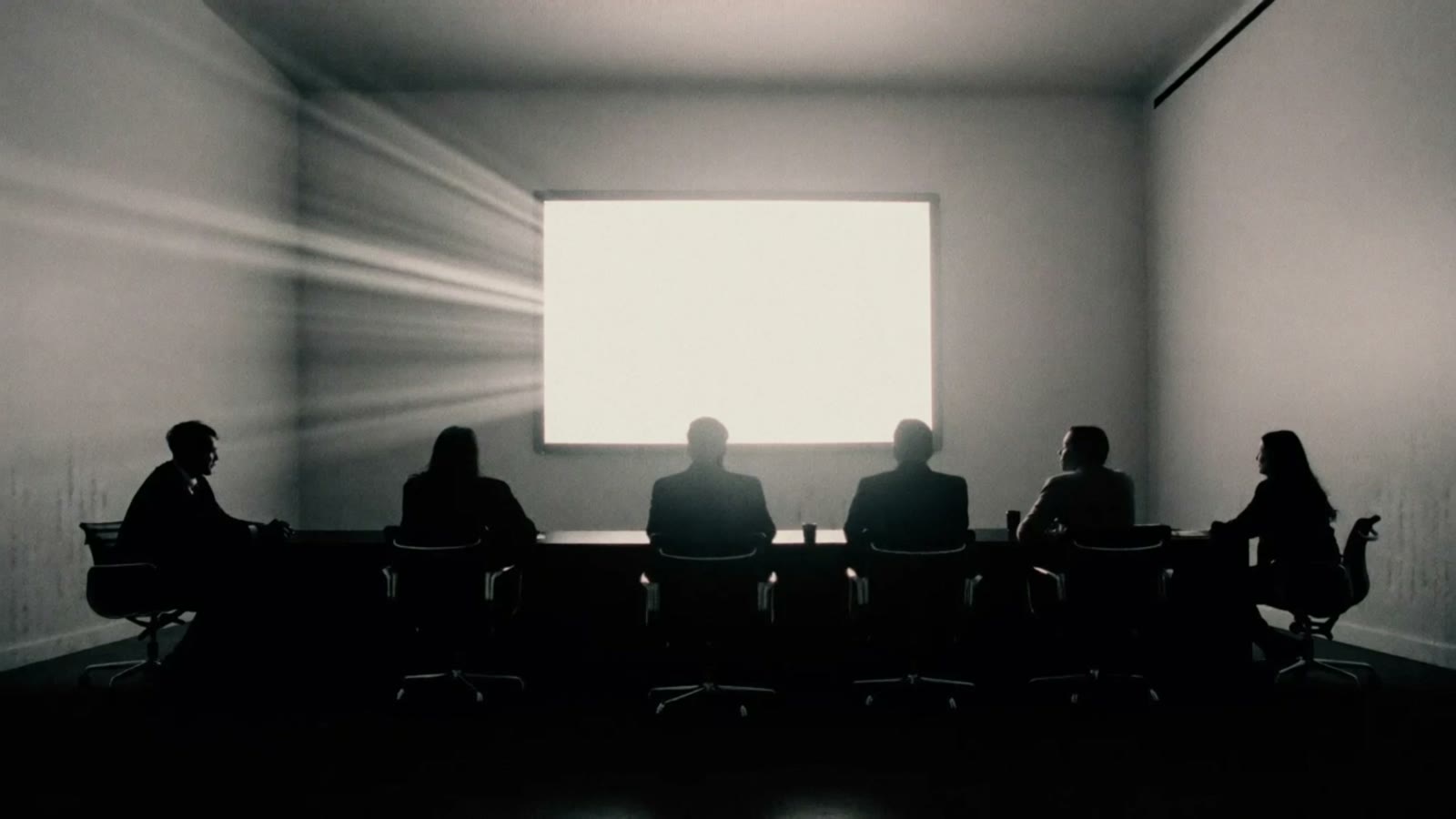
Now the executive team gives him one morning. Three hours in a room, talking about their own company: who they serve, what they sell, what they believe makes them different.

02The day

What the room actually sees.

9:00

The room starts talking.

Four to seven of the client's decision-makers sit down. They prepared nothing.

The conversation is recorded. While it is still going, a set of AI agents trained on Chad's own process does what the research team used to do. Pulls apart a hundred competitors. Builds the feature lists. Reads what the market is actually saying. Finds the openings where this company's strengths line up against everyone else's gaps.

10:45

The room reads its own story.

They read their own story on the screen, written from what they said an hour earlier. They argue with it. They move things around.

11:30

A hundred competitors, in three piles.

By late morning there is a dashboard on the screen in that room, filled with their own market. Chad walks the team through it.

They see the competitor scan sorted into three piles: real rivals, the outer ring, and noise. Every crowded claim is scored, so they can see which of their favorite lines everyone else is already using.

That's before lunch. A consultant comes back in three weeks with a deck.

3:40

Two decisions the room owns.

Who they're really for, and the one claim only they can make. They make the decision right there, with the evidence in front of them, instead of three months later in an email.

The dashboard is live that evening. Within 48 hours there are more than 50 finished pieces built on what the room decided.

the build, 48 hours

That is the whole invention. Not the AI. The research finishes before the conversation does.

Here is the whole business in four lines.

The day. $35,000.

One day, 9:00–3:40. Four to seven of the client's decision-makers in one room. They prepare nothing. By 3:40 they've made two decisions they own: who they're really for, and the one claim only they can make.

The build. Included.

That evening they have a live dashboard. Within 48 hours they have more than 50 finished pieces built on what the room decided: email sequences, web pages, sales material, competitor cards, customer research. A LEVR integrator builds all of it. He's our employee, on our payroll, and the build is his problem rather than yours.

The monthly program.

The system stays on. It watches their market, flags when one of those decisions starts to drift, and keeps producing work against it. This is where the recurring money comes from.

The quarterly sit-down.

You go back in, four times a year, and walk them through one decision the market is forcing. That's why the client is still yours in year three.

What we learned the expensive way

It waits on purpose.

The software doesn't listen live. It transcribes in batches, after each conversation ends.

That's deliberate, and we learned it the expensive way. The last twenty minutes of an argument between executives can undo the first ninety. In one room, it did. A tool that listens live has already built on a conclusion the room is about to reverse. Ours builds off the finished conversation. If a late talk flips something earlier, you resubmit and it rebuilds.

The room does the work, not you.

the cards, before the stack

Every strength that comes up goes on a card.

Once it's on a card, the argument stops being personal. People argue the card instead of each other. You stop being the man with an opinion and become the man running the process.

Then the cards get stacked into a pyramid. At the bottom, the claims every company in their industry makes. At the top, the one thing this company is genuinely world-class at.

The final answer is never something you invented. It's already sitting on one of those cards.

It's something they believe about themselves and have never once said out loud. Your job is to make them pick it, then say it clean.

Software cannot do that part. A model can write. It cannot get seven executives to commit to a hard decision, then be the person who defends that decision in June when the VP of sales wants to soften it. That takes somebody in the chair.

03The record

What we've proven, and what we haven't.

You've been pitched by people who show you someone else's numbers. Here are ours.

2 yearsChad has been running this same model with companies, under an earlier product.
3 monthsThe one-day format is that new — compressed, with software doing the work in the room.
5 clientsBrought by the one person outside the founders who has done it: Brian Haberman.
732 / ~$368kAccredited EOS implementers, and what they average a year each. Their number, not ours.
The method is two years old. The one-day format is three months old.

Chad Hancock has been running this same model with companies for a couple of years, under an earlier product. What's new is the day itself: we compressed it, and we built software that does the work in the room instead of three weeks later. Chad built it, he's run every one of these rooms so far, and he'll be in yours.

Real companies, real money.

A 260-location retail group, a youth sports brand with about 80 locations, and a hospitality operator across roughly twenty properties are paying for it now.

One person outside the founders has brought his own clients.

Brian Haberman came through the program and brought five. Then he introduced us to Andrew Nash, a former CEO who ran a network of agencies. We paid Brian nothing for that introduction. We don't pay for introductions, and we're not going to start.

Six more operators are in training.

On the call we'll walk you through where each of them stands, by name.

Here's what we can't show you.

No client has been on the monthly program long enough to report a renewal rate. Our whole plan rests on that number. When we have twelve months of it, you'll be one of the first to see it. Right now it's a bet we're both making.

the stack, after the argument

The closest thing that already works

EOS, the Traction operating system, accredits 732 implementers. Each one runs a method they didn't invent, in rooms full of executives who needed a neutral person to force a decision. They average roughly $368,000 a year each.

The number belongs to them. It isn't ours, and we're not claiming it. It's the only outside evidence that this shape of business supports the kind of money you'd do this for, and you can go check it without talking to us.

Where the comparison flatters us: an EOS implementer walks in behind a book that sold millions of copies. You'd walk in with a company nobody has heard of yet, selling a $35,000 day on the strength of your own name. Yours is the harder job.

And we're early. If you need a program with a decade of case studies, we're not that yet, and you should wait.

Show me what I'd be selling

Twenty minutes. No deck. We'll show you the system and the numbers.

04The job

What you'd actually do.

The label is LEVR-Accredited Facilitator. In plain words: you're the person who brings the client and runs the room.

01
Bring a client.

Someone already on your list. Someone who takes your call.

02
Run the day.

You're in the room. We're on the screen.

03
Hand off the build.

Your integrator takes it from 3:40. You don't touch it.

04
Stay the person they call.

A light monthly check-in and the quarterly sit-down. The relationship stays yours.

You never become technical. You never debug anything at 11pm. We pay the integrator to carry that.

How you get accredited

You read the playbook, and we talk for two hours. You'll know on that call whether this is a room you can run. Everyone in the program so far knew inside twenty minutes.

Then you shadow a real, paid workshop. Not a roleplay. Chad sources it and runs it. You co-facilitate.

Then you run one yourself, with Chad there to catch a stalled room. You get paid on it. Real deals from the first one, not unpaid practice.

Then you're accredited. It's a quality sign-off, not a course you finish.

It costs nothing at any point. No training fee, no license, no seat. That's self-interested on our side: a fee filters for people who can pay it instead of people who can run a room.

What it pays

We're not going to print a split table on a web page. We're changing how we pay facilitators right now, and anything we printed today would be wrong by the time you read it.

So here it is at altitude. One client pays you three ways: the day itself, the monthly program for as long as you're the one stewarding that client, and any work you sell around it, which is your own business and stays that way.

Put together, one client is worth tens of thousands of dollars to the person who brought them.

On the call we'll show you the exact numbers, in writing. Take them to your own lawyer before you sign anything. We'd rather you did.

05The fit

Who we're looking for.

We don't take everybody, and we're not saying that to sound exclusive. An accreditation is only worth holding if it's hard to get.

It fits if you

  • have run a company, an agency, or a consultancy with your name on the risk
  • can get a CEO on the phone this week
  • are good in a room where people disagree
  • want a reason to walk back into every client you've ever had

It doesn't fit if you

  • want leads handed to you instead of bringing relationships
  • want a territory and a script
  • need a program with ten years of proof
  • would rather sell software than sit through a hard conversation
There's no downline.

You are never paid for signing up another person. Brian introduced us to Andrew and got paid nothing for it, on purpose. Our money comes from clients using a product. It never comes from recruiting people. That's the line between a channel and an MLM, and we turned down the referral-fee version of this model on purpose.

You're not leaving your business.

This is one more thing you walk in with, on top of what you already do. Most of what you'd sell around it stays entirely yours.

06The call

You have the part we can't build: people who trust you. We have the part you'd otherwise spend four years building, and wouldn't want to.

We're accrediting a small number this year. We'd rather have ten people who can run the room than forty who filled a slot. So the call runs both ways. Come with the hard questions: the contract, the numbers we don't have yet, what happens when a room goes badly. Those are the ones worth twenty minutes.

Show me what I'd be selling

Twenty minutes. No deck. If your network isn't the kind this works in, we'll tell you in the first ten.

P.S. You've got forty people who'd take your call tomorrow. The only question that's been getting harder is what you say when they pick up. That's the part that changes the week you can walk back in with this.